
Nobody dreams about gutter cleaning.
When people imagine becoming entrepreneurs, they tend to imagine businesses that are exciting to talk about: technology companies, fashion brands, restaurants, apps, media companies or something sufficiently new that it feels like they are participating in the future. Very few people sit down and think, I would love to build the best gutter-cleaning company in the country. I certainly didn’t.
But the longer I spend building businesses, the less interested I have become in whether a business sounds exciting and the more interested I have become in what sits underneath it. Does demand already exist? Is the market fragmented enough? Do customers understand what they are buying? Does the problem keep coming back? Can better execution create a meaningful advantage? Can the business become stronger as it grows within a local market? And, ultimately, does the thing generate cash?
Those questions have led me towards a category of companies I loosely describe as boring businesses. The term is useful, but it can also be misleading because a business is not attractive simply because it is boring. There are plenty of boring businesses with terrible margins, difficult customers, expensive equipment and miserable economics.
Boring describes the story. It does not describe the economics.
What interests me is that certain businesses we tend to overlook happen to possess a combination of characteristics that can make them structurally attractive. These are the seven characteristics I now pay attention to before I care whether a business is exciting.
1. The demand already exists
One of the hardest things you can do in business is attempt to create demand for something people do not yet understand they need. Before you can sell the product, you first have to convince people that the problem exists, then convince them that the problem matters, and finally persuade them that your solution is the right way to solve it. That can be an incredibly expensive place to start.
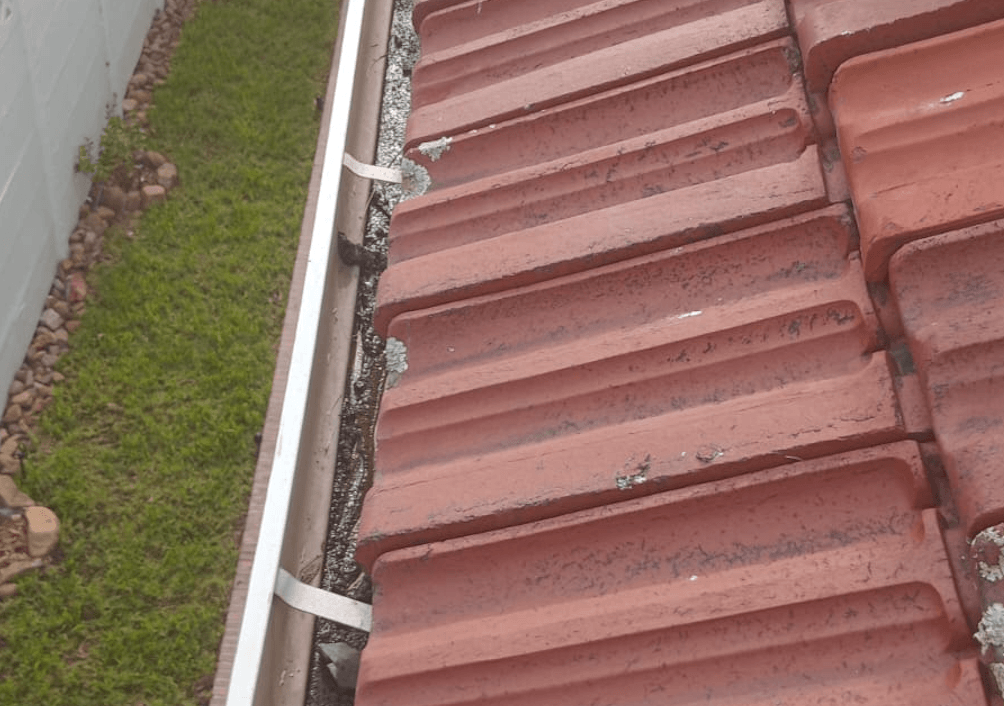
Many boring businesses begin from a different position. The gutter is already blocked. The grass is already growing. The swimming pool still needs maintaining. The office still needs cleaning. The waste still needs removing. The gate still needs fixing. The customer may not yet know which company they are going to use, but they already understand the problem and, importantly, they already have some willingness to spend money solving it.
When somebody searches for gutter cleaning, GutterFix did not create that need. We are not trying to convince the homeowner that gutters exist or that blocked gutters might eventually require attention. The homeowner has already reached the point where they want something done. Our commercial job is to become the company they trust to do it.
Existing demand does not mean easy money. You still need marketing, a clear offer, sensible pricing, good sales processes and competent execution. You still need to answer the phone, send the quote, show up and do the work properly. But there is an enormous difference between asking “How do I convince somebody they need this?” and asking “How do I convince somebody who already needs this that we are the company they should choose?”
I would much rather begin with the second problem.
2. The market is often fragmented
The second characteristic I look for is fragmentation. Many local service industries are not dominated by one or two enormous companies. Instead, they are made up of independent operators, small businesses, owner-operators and regional specialists competing within relatively narrow geographical areas.
Fragmentation does not mean the competition is weak. Some small operators are exceptional at what they do. What fragmentation can mean, however, is that no single business has comprehensively solved the entire customer experience. Nobody necessarily owns the market, the brand, the distribution or the customer relationship.
That leaves room to compete in ways that have very little to do with inventing a better technical service. You may not need to discover a revolutionary new way to clean a gutter. You may simply need to build a substantially better gutter-cleaning company through better branding, lead generation, quoting, scheduling, communication, technicians, quality control, follow-up and retention.
That distinction has become increasingly important to how I think about entrepreneurship. Innovation does not always mean creating something that has never existed before. Sometimes it means taking something that has existed for decades and building a much better organisation around it.
3. The customer proposition is simple
I like businesses where the customer can understand what the company does almost immediately. We clean your gutters. We maintain your pool. We mow your lawn. We wash your windows. We clean your office. We remove your unwanted waste.
There is very little conceptual friction in those propositions. The customer understands the service, understands the problem and generally understands what a successful outcome looks like. That simplicity can make marketing easier because you do not need ten minutes to explain what the company actually does before somebody can decide whether they are interested.
But a simple proposition should not be confused with a simple business. Behind the sentence “we clean your gutters” sits marketing, lead management, assessments, quoting, routing, labour, vehicles, equipment, safety, scheduling, customer communication, quality assurance, invoicing and follow-up.
The customer does not need to see that complexity, but the company needs to master it. That is often where the opportunity lies. The front end of the business is simple enough that customers immediately understand what they are buying, while the back end is difficult enough that companies which execute consistently can separate themselves from everyone else.
That combination interests me because it means the competitive advantage can come from operational excellence rather than from constantly explaining a complicated product.
4. The problem often comes back
Some of my favourite businesses solve problems that refuse to stay solved. You clean the gutter and leaves eventually return. You mow the lawn and the grass grows again. You clean the office and people come back tomorrow. You maintain the pool and it still needs attention next week.
This creates something extremely valuable: natural recurrence.
When people talk about recurring revenue, they tend to think immediately about subscriptions, but there are really two different forms of recurrence. The first is contractual recurrence, where the customer agrees to pay every week, month, quarter or year for an ongoing service. The second is natural recurrence, where the customer may not have signed any long-term agreement, but the underlying problem recreates itself anyway.
I find the second category particularly interesting because the market itself keeps generating future demand. If you serve the customer well, the first transaction does not necessarily have to be the end of the relationship. The customer may need the same service again, may need an adjacent service, may recommend you to somebody else, may eventually move onto a maintenance plan, or may use you across multiple properties.
This is where the economics of a boring business can start becoming far more interesting than the first invoice suggests. A R3,000 or R4,000 job should not automatically be viewed as a R3,000 or R4,000 customer. A more useful question is: what could this customer be worth over the lifetime of the relationship?
That question changes how you build the company.
5. Weak execution can create enormous opportunity
This is probably the characteristic that has surprised me most since moving deeper into home services. Customers are often impressed by things that should be completely normal: you replied quickly, arrived when you said you would, sent the quotation when you promised, explained what you found, took photographs, documented the work and followed up afterwards.
None of this sounds revolutionary because it isn’t. It is basic business. But basic business, executed consistently, can become differentiation when the customer’s previous experiences have been inconsistent.
I want to be careful here because it would be lazy to say that entire trades or service industries are unprofessional. They aren’t. There are excellent operators everywhere. But through building GutterFix, I have repeatedly encountered customer frustration around communication, reliability, quoting and follow-through, and that matters because it changes what is required to compete.
You do not always have to reinvent the service. Sometimes the opportunity is to professionalise the company delivering it.
The actual technical work remains critically important. If the work is poor, none of the branding or communication around it matters. But when competent technical execution is combined with strong systems, something more valuable begins to emerge. Reliability becomes part of the product. Communication becomes part of the product. Documentation becomes part of the product. Trust becomes part of the product.
The customer may believe they are purchasing a gutter clean, but what they are really purchasing is confidence that the problem will be dealt with properly.

6. Locality can become a competitive advantage
A local service business has an obvious limitation: it is local. You cannot clean a gutter in Cape Town from an office in New York. You need people, vehicles, equipment and operational capacity in the physical market where the customer lives.
But that limitation can also become a form of protection.
The internet made it possible for software, media and ecommerce companies to compete globally from almost anywhere. Physical service businesses work differently because geography still matters, and geography creates the possibility of density.
Imagine beginning with one customer in a neighbourhood, then ten, then fifty, then two hundred. Over time, several things can improve simultaneously. Travel distances shrink, scheduling becomes easier, technicians spend more time working and less time driving, branded vehicles become familiar, neighbours see the company operating nearby, referrals increase and reviews accumulate.
The company can also become operationally smarter. It learns which neighbourhoods contain certain property types, which access problems are common, which areas generate stronger customer lifetime value and where certain service combinations make sense.
This is one reason I am increasingly interested in the concept of local dominance rather than simply national presence. You do not necessarily need everyone. You need enough of the right customers within a sufficiently dense market.
That can become a surprisingly durable advantage.
7. They can generate meaningful cash without requiring a spectacular exit
There is another reason these businesses appeal to me: they can work without needing the story to end in a billion-dollar acquisition.
Entrepreneurship culture can sometimes distort the definition of success. Venture-backed technology companies are often built around enormous future scale, rapid growth and eventual exits. There is nothing wrong with that model when the economics of the business require it, but it is not the only game available.
A boring business can often be evaluated using much simpler questions. What does it cost to acquire a customer? What does the customer pay? What does fulfilment cost? What gross profit remains? How much overhead does the company require? Does the customer return? Can the work be delegated? Can the system be replicated? How much cash does the business ultimately produce?
Those questions are not glamorous, but they are difficult to fake.
A company does not need millions of customers to become economically meaningful. A strong local operator serving hundreds or thousands of good customers can build something substantial, and when the business produces reliable cash, that cash can be redeployed. It can fund expansion, purchase equipment, employ people, acquire competitors, finance other businesses or buy assets.
Most importantly, it can give the owner choices.
That matters enormously to me because I am not interested in business merely as a way of staying busy. I am interested in building assets, and an asset should ultimately increase the owner’s freedom rather than permanently consume it.
Boring is not automatically good
This is where the boring-business conversation can go wrong. Once people discover the idea, there is a temptation to swing too far in the opposite direction and start treating every laundromat, cleaning company, landscaping business, plumbing company and waste-removal operation as some hidden gold mine.
That is nonsense.
A business can be extremely boring and still be a terrible investment of your time and money. It may have poor margins, require expensive equipment, carry substantial liability, depend on scarce technical skills, suffer from extreme seasonality or rely on customers who only purchase once every ten years.
The labour model may be difficult. Competition may be intense. The service may be commoditised to the point where price becomes the only meaningful lever. Capital requirements may overwhelm the cash generation.
That is why boring cannot become the thesis. The underlying characteristics are the thesis.
The useful question is not “Is this business boring?” It is “What does this particular business look like economically and operationally?” That is a harder question, but it is also the one that matters.
The Boring Business Test
When I look at a business now, there are seven questions I want answered before I become too interested in the story.
The first is demand. Does meaningful demand already exist, and are customers already spending money attempting to solve the problem?
The second is fragmentation. Is the market structured in a way that gives a new operator a realistic chance of establishing a position?
The third is clarity. Can the customer quickly understand the problem, the service and the value proposition?
The fourth is recurrence. Does the underlying need naturally repeat, and can one transaction reasonably lead to another?
The fifth is the execution gap. Is there room to outperform competitors through reliability, systems, customer experience or operational discipline?
The sixth is local defensibility. Can density, reputation, distribution, physical infrastructure or local knowledge create an advantage over time?
And the seventh is cash generation. After all the costs are accounted for, can the business produce attractive cash flow?
None of these questions should be treated as a binary checklist. A business does not need perfect marks in every category. The purpose of the framework is to force a shift away from asking whether an idea sounds good and towards investigating whether the business underneath it actually works.
GutterFix is my laboratory
GutterFix has become the place where I test many of these ideas in the real world.
I did not enter the industry because I have always been deeply passionate about gutters. I entered because the economics and market structure became interesting. There was already demand, the customer problem was easy to understand, the market was fragmented, there appeared to be significant room to compete through better marketing and execution, property maintenance naturally created recurring needs, and the geographical nature of the work created the possibility of building density.
The more we operate the company, the more interesting the questions become. Can quoting be systemised? Can assessments improve downstream sales? Can technician training be standardised? Can customer lifetime value be increased through adjacent services? Can technology reduce administrative cost? Can we own more of the execution layer? Can one trusted relationship with a homeowner expand into a broader property-maintenance relationship? Can the model be repeated across cities?
Those questions are far more interesting to me than gutters.
The gutter is simply the starting point. The real experiment is building the machine around it, and that distinction matters because the product you initially sell is not always the business you are ultimately building.
Excitement is a terrible screening criterion
There is nothing wrong with building something you are passionate about, and there is nothing wrong with wanting to work in an industry you find fascinating. But I no longer think excitement is a particularly useful way to screen business opportunities.
The question “What business would I love to own?” can easily send you in the wrong direction. A more useful question might be: What persistent economic problem could I become exceptionally good at solving?
The answer may not sound impressive. It may involve ladders, vans, dirty swimming pools, blocked drains, overflowing gutters, rubbish, lawns or dozens of technicians moving around a city doing ordinary work for ordinary customers.
There may be nothing glamorous about it, but glamour and value are not the same thing.
In fact, the mundane nature of the work may be exactly why the opportunity has remained available. Fewer people want to obsess over quoting systems, route density, technician utilisation, call handling, follow-up sequences, customer retention and maintenance schedules.
Those details are not exciting enough to attract much attention.
They are, however, exactly the kind of details that determine whether a business works.

The real question
Boring businesses can be attractive because certain ones combine characteristics entrepreneurs routinely underestimate: existing demand, fragmented markets, simple propositions, recurring problems, execution gaps, local defensibility and strong cash-generation potential.
But the important word there is can.
Boring is not a shortcut around analysis. It is not a guarantee of profitability, and it certainly does not mean you should quit your job tomorrow and start the first plumbing company you can think of.
It simply means some of the most interesting businesses may be hiding in categories we have trained ourselves to ignore.
So the next time you come across a boring business, don’t ask whether you would be excited to tell people you own it. Ask whether the demand already exists. Ask why the market is fragmented. Ask how often the customer returns. Ask where the operational weaknesses are. Ask what would happen if the company executed exceptionally well.
And, most importantly, ask whether the business actually works.
Because boring describes the story.
The economics determine whether the business is worth building.
Free Resource: The Boring Business Opportunity Checklist
I have turned the seven characteristics in this article into a simple screening checklist you can use to investigate a business you are considering.
It will not tell you whether a business is “good” or “bad”, because that would be far too simplistic. Instead, it will help you identify the assumptions that need further investigation before you commit serious time or money.
Use it on one business you are currently considering and see what you discover.